Powering California Businesses with Solar Carports.
Turn your parking lot into a power plant. Solar carports generate clean energy overhead while providing shaded vehicle protection below — no rooftop required. Available incentives, EV-ready design, and shade that works as hard as the array.

Carports in the field
Shade structures that generate power.
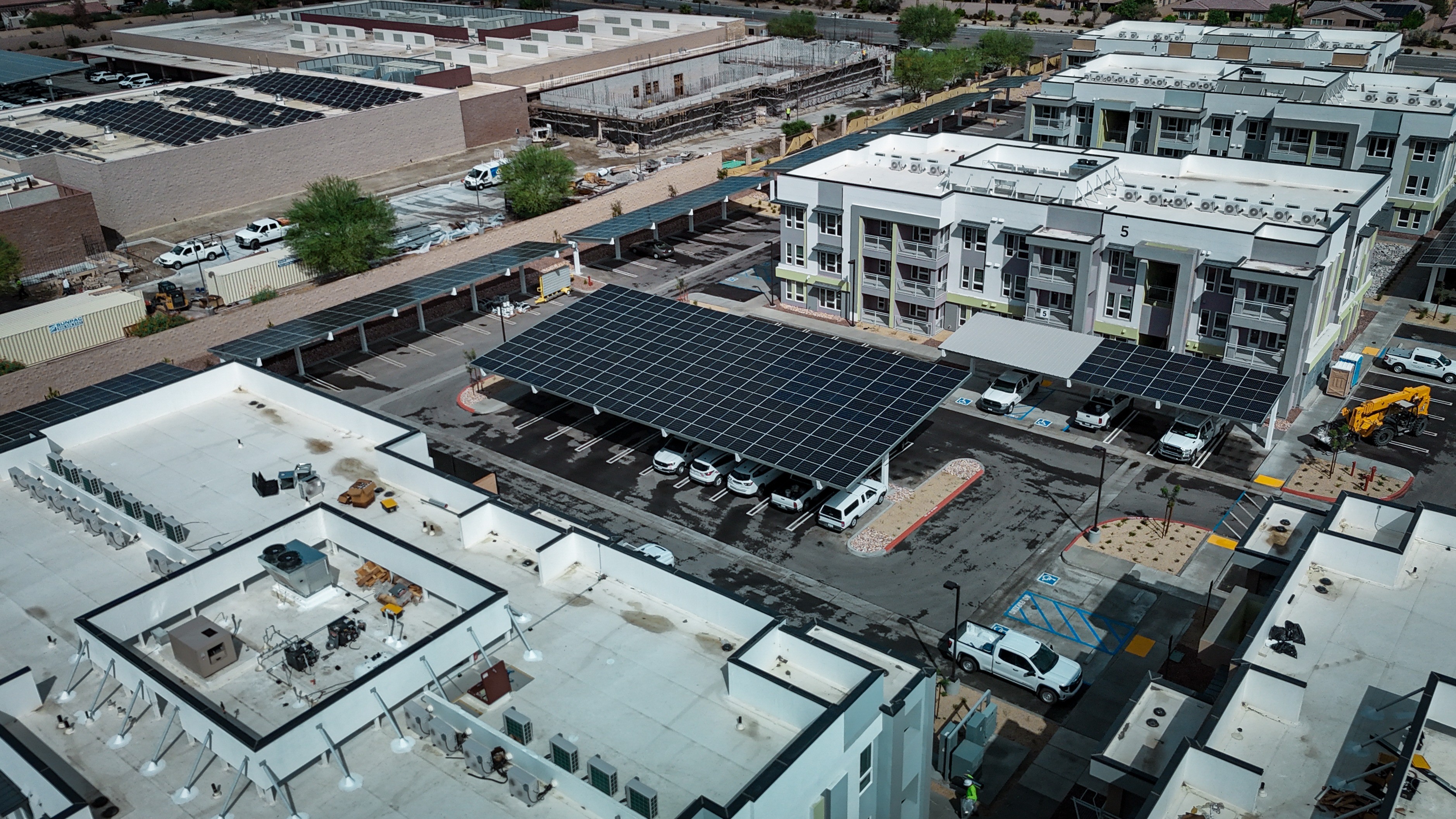
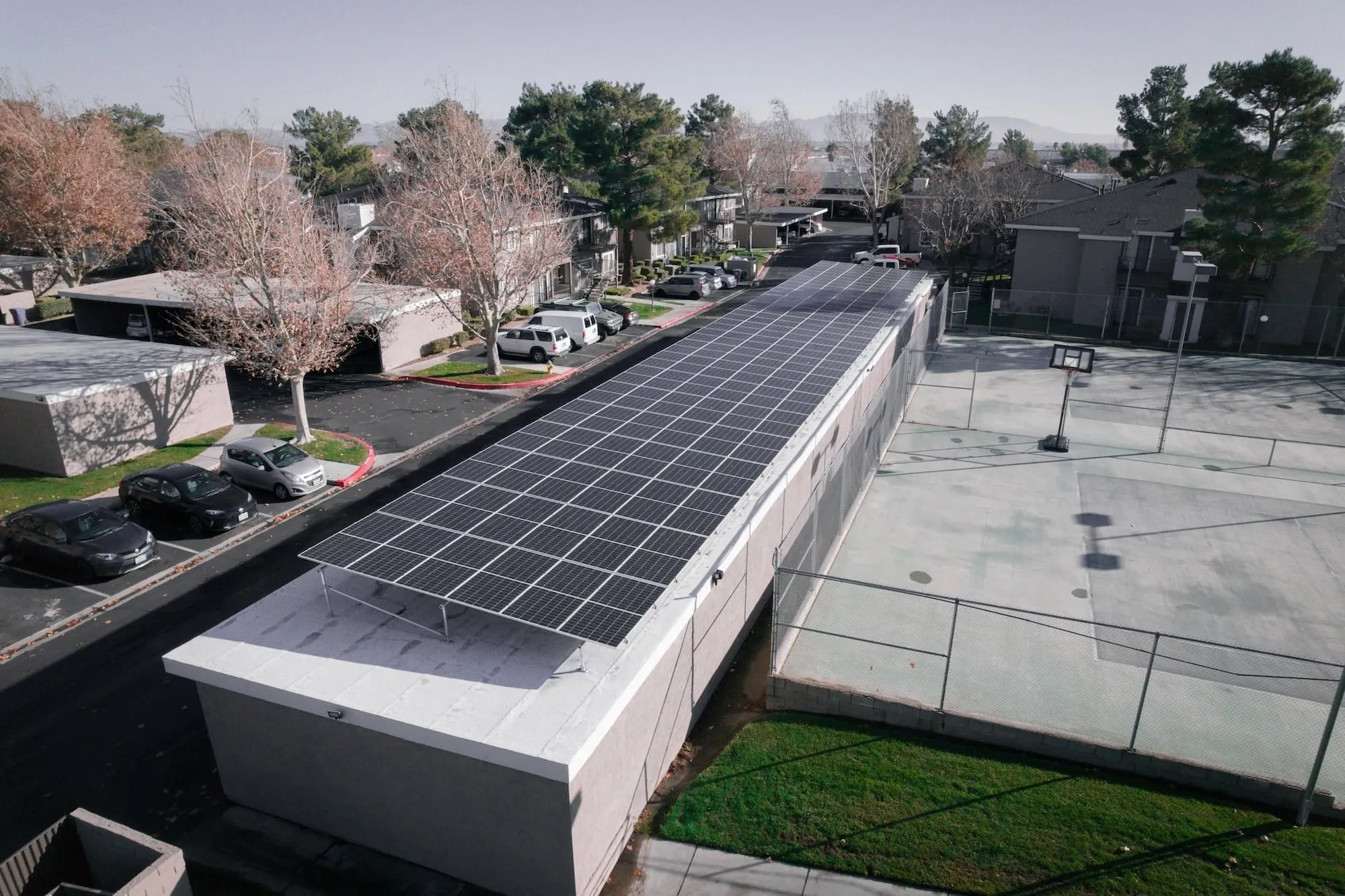
Real Option One carport and canopy installs — crews and vehicles on site.
Your parking lot can work harder
A commercial solar carport is an elevated canopy structure installed over your existing parking. Solar panels mount on top, generating clean electricity — while the structure below provides shaded vehicle protection. No rooftop needed.
- Dual-purpose infrastructure — generate power while protecting vehicles from heat, hail, and UV damage.
- No roof penetrations — ideal for properties with aging roofs or limited structural capacity.
- EV charging ready — integrate Level 2 or DC fast chargers directly into the canopy structure.
- 30% Federal ITC + MACRS depreciation — dramatically reduces your effective net cost from day one.
Six Reasons Businesses Choose Carports Over Rooftop Solar
Solar carports aren't just an alternative — in many cases they're the smarter investment for California commercial properties.
Maximum Energy Output
Carports can sit at a productive tilt with fewer roof constraints than many retrofit arrays — we model the difference for your site.
No Roof Penetrations
Freestanding structures eliminate roof warranty concerns entirely. Your building's roof stays intact and fully warranted throughout the system's life.
EV Charging Integration
Pair your solar canopy with EV chargers to create a self-powered charging hub. Meet California AB 2511 mandates and attract EV-driving customers and employees.
Vehicle Protection
Shaded parking reduces interior car temps by up to 40°F — a major draw for employee satisfaction, dealership inventory, and customer experience.
Powerful Tax Incentives
The federal ITC (stackable toward 50% with bonus adders), MACRS bonus depreciation and California SGIP rebates still offset a large share of project cost in year one. Two federal programs closed in mid-2026, and the ITC now runs on a much shorter clock, so what a project qualifies for depends on when it starts.
Brand & ESG Value
A visible sustainability statement. Solar carports communicate your values to employees, customers, and investors — qualifying for LEED and green building credits.
Built for Every Commercial Property
From auto dealerships to school districts, any property with a parking lot is a candidate for a solar carport.

Auto Dealerships
Protect inventory, lower utility bills, and impress eco-conscious buyers with shaded, solar-powered lots.
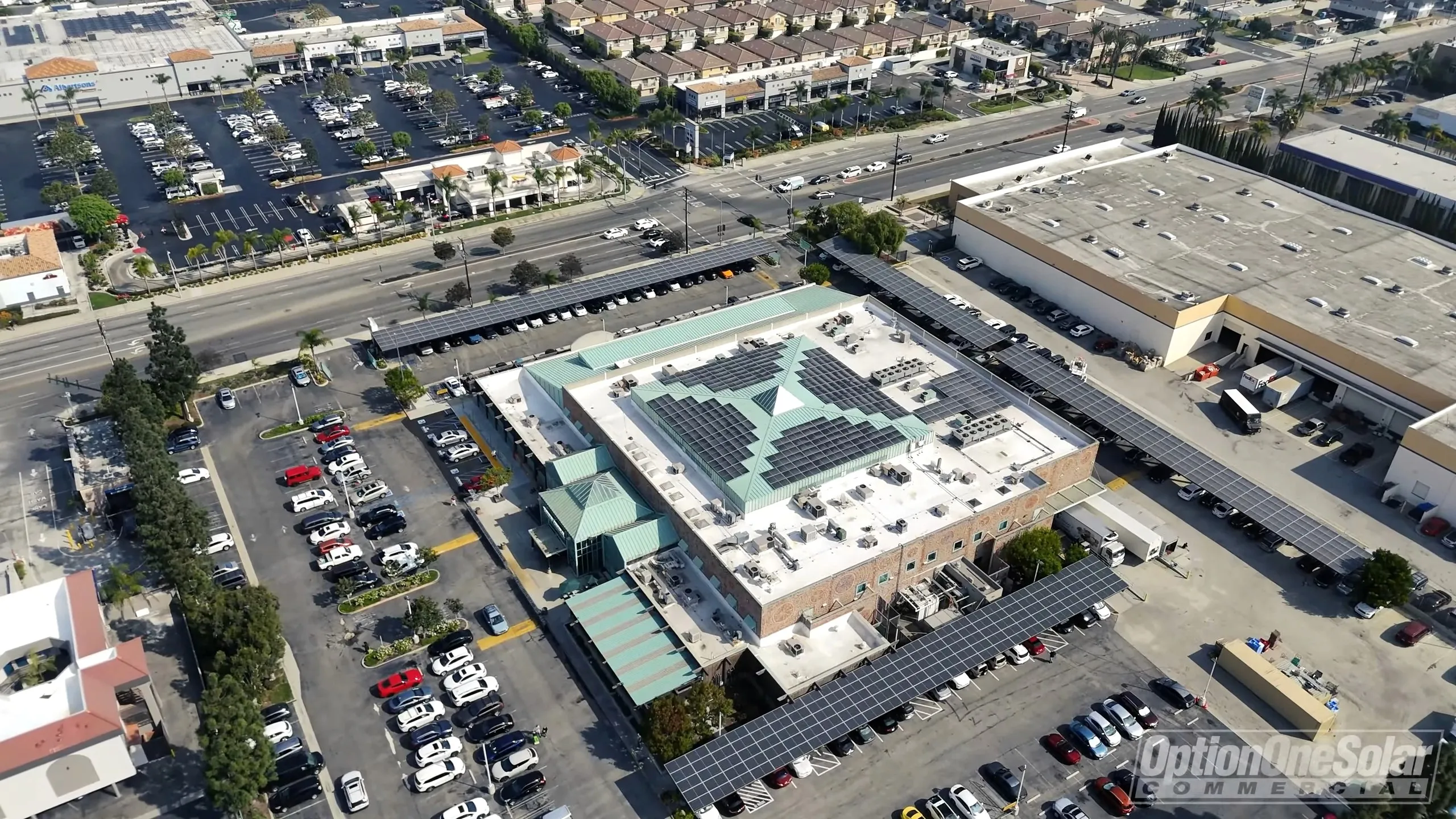
Shopping Centers
Turn vacant parking spaces into energy assets while giving shoppers comfortable shaded parking year-round.
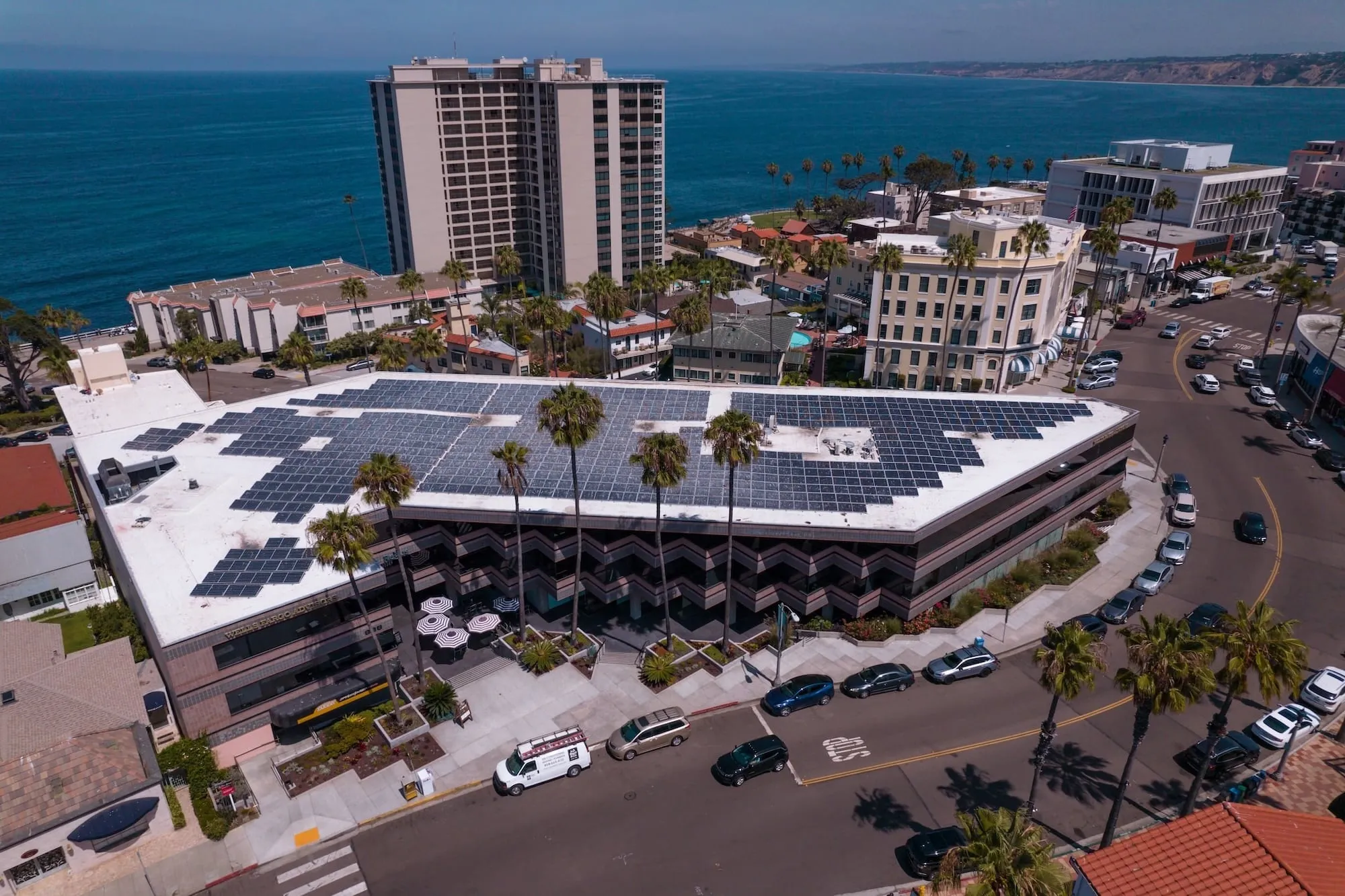
Office Campuses
Lower operating costs, achieve ESG goals, and provide employees with shaded EV charging at work.
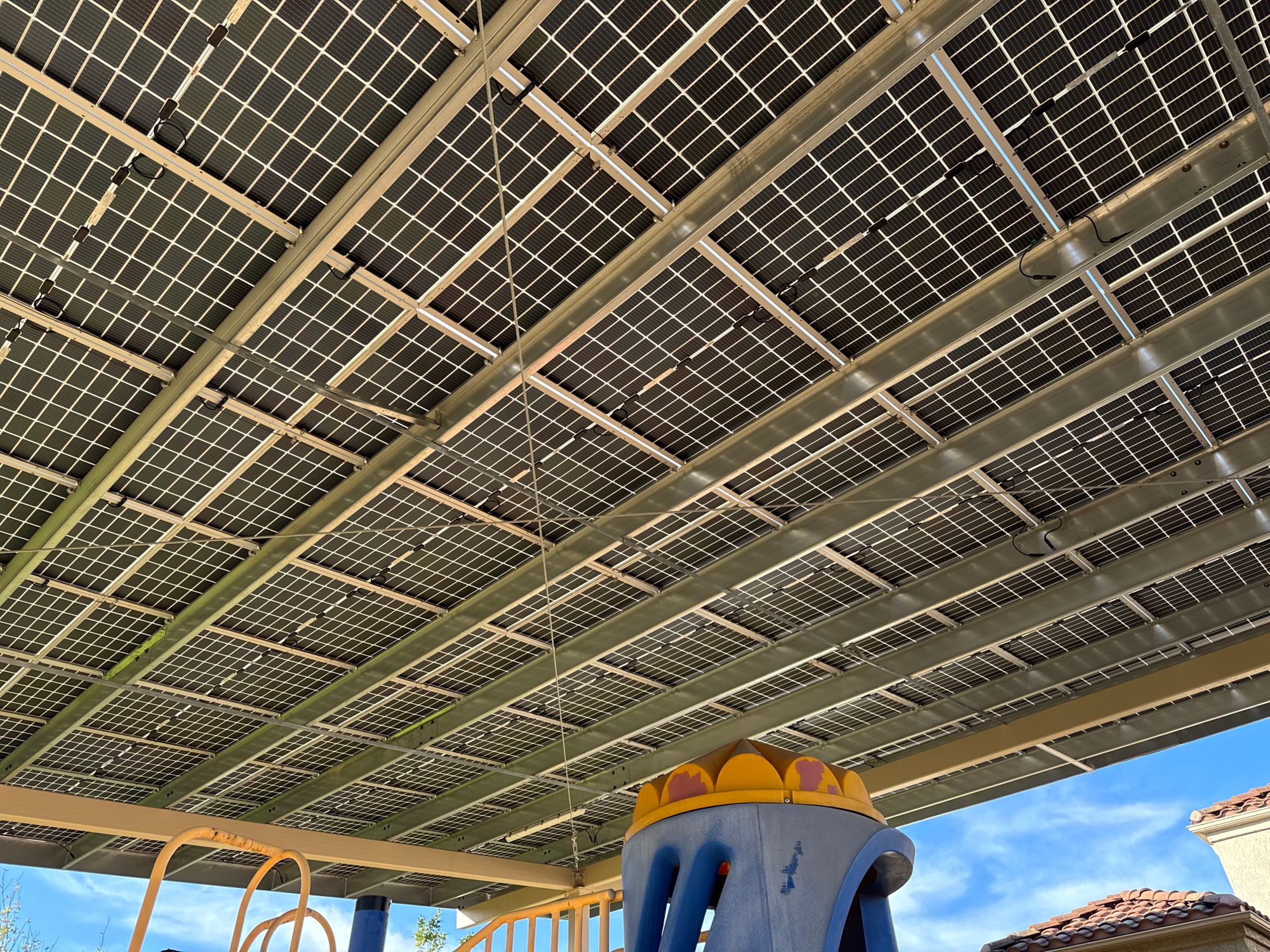
Schools & Universities
Reduce energy costs, create living learning labs, and demonstrate environmental stewardship to the community.
Municipalities
Meet state mandates, reduce budget pressure, and serve as a visible model of clean energy for your community.

Warehouses & Distribution
Offset high energy demands with a solar canopy over fleet parking and loading zones.
Getting Started Is Simple — For Any Size Project
Whether you have 30 spaces or 3,000, our end-to-end process is designed to go seamlessly from start to finish.
Consultation & Assessment
Our commercial team evaluates your parking lot, utility bills, and energy goals — delivering a detailed proposal with modeled production and operating impact.
Custom Design & Engineering
Licensed engineers design your carport for maximum energy output, meeting local wind and seismic load requirements specific to your site.
Permits & Approvals
We handle all permit applications, utility interconnection, and AHJ submissions in-house. Zero headaches on your end.
Installation & Commissioning
Our in-house crew installs, tests, and commissions your system. Ongoing support and a real-time monitoring dashboard included from day one.
Add EV Charging to your Carport
California's EV mandate is accelerating. Bundle EV chargers into your carport project and take advantage of available EVSE incentives that can substantially reduce your out-of-pocket cost — though incentive coverage varies by program and project.
Level 2 & DC Fast Chargers
Choose the right charger for your use case — employee parking, fleet vehicles, or public customer charging.
EV charging: the 30C credit has expired
The Section 30C credit that used to cover part of the charger equipment and installation expired on 30 June 2026, so a new install cannot claim it. C-PACE zero-down financing is still available, and pairing chargers with storage still cuts demand charges — the economics just no longer lean on that credit.
Smart Energy Management
Pair with battery storage to charge vehicles during off-peak hours, reducing demand charges and utility costs further.

What actually moves the needle
We walk through incentives that apply to your site — and model production against your rate schedule. No brochure ROI.
Federal Investment Tax Credit (ITC)
Base 30%, and it stacks toward 50% with bonus adders. The July 2026 begin-construction window has closed, so a project starting now has to be placed in service by 31 December 2027 to qualify.
ITC Bonus Adders
+10% Domestic Content (OOS carports qualify) + 10% Energy Community — stackable on top of base ITC.
MACRS Bonus Depreciation
100% bonus depreciation on remaining basis after ITC — major year-one tax offset.
Section 179D Deduction (closed to new starts)
Worth up to $5.94/sq ft, but only for projects whose construction began on or before 30 June 2026. If yours did, it can still be claimed when the property is placed in service.
30C EV Charging Credit (expired)
Expired 30 June 2026. Shown here because older quotes and competitor pages still cite it.
California SGIP Cash Rebate
Direct rebate for battery storage — $0.25–$1.00/Wh depending on location and eligibility.
Operating cost relief
Savings depend on your tariff, load shape, and how much of the lot you cover. We model it — we do not invent a typical dollar figure.
NEM 3.0 Net Metering
Export excess energy to the grid for bill credits.
Property attractiveness
Solar-ready commercial sites can be more attractive to buyers and tenants — we do not claim a fixed sale-price bump.
Talk numbers
We model your rate schedule and load — no one-size ROI claims
Available Incentives
- Federal ITC — 30% base, stackable to 50%
- Domestic Content bonus +10% (OOS carports qualify)
- MACRS 100% bonus depreciation
- Section 179D deduction (up to $5.94/ft²)
- 30C EV Charging Credit (expired 30 June 2026)
- California SGIP rebate ($0.25–$1.00/Wh)
- NEM 3.0 net metering credits
- CA property tax exclusion (AB 2462)
Trusted by Homeowners & Businesses Across California
See why our clients — from first-time solar homeowners to commercial property managers — choose Option One Solar.
Get Quick Answers to Common Questions
Have questions? We've got answers — for homeowners and businesses alike.
Getting Started
Commercial solar carport systems typically range Costs vary by structure, geotech, and interconnection. We price from stamped drawings for your site — not a brochure average — and walk you through incentives that actually apply to your property.
We recommend a minimum of 20–30 parking spaces for a viable commercial project. Systems are most cost-effective at 60+ spaces. Our team can assess virtually any parking lot configuration.
From contract to commission, most projects take 3–6 months: 2–4 weeks for design, 4–10 weeks for permitting (varies by jurisdiction), and 4–8 weeks for installation. We stage work to minimize disruption to your parking operations.
Option One Solar is a full-service EPC firm handling everything in-house — design through permitting, construction, and ongoing support — with no subcontracting. CSLB licensed, fully insured, 500+ California commercial installations.
Financing & Ownership
Buy it. For commercial properties ownership is almost always the better deal, because it lets you capture the ITC and MACRS depreciation directly instead of handing them to a third party. We do not facilitate PPAs on commercial projects — cash or a loan, and the asset is yours. If the numbers only work as a PPA, we would rather tell you that than write one.
We work with commercial solar lenders offering 7–25 year terms. Many clients finance 100% of project cost, achieving positive cash flow from month one because energy savings immediately exceed loan payments.
Federal: the ITC at 30% base, stackable toward 50% with the Domestic Content bonus (+10%, which our carports qualify for) and the Energy Community bonus (+10%). The begin-construction window that ran to July 2026 has closed, so a project starting now must be placed in service by 31 December 2027 to qualify — a much shorter runway than projects that started earlier. MACRS 100% bonus depreciation still applies. Two programs have closed to new projects: the Section 179D deduction (construction had to begin by 30 June 2026) and the Section 30C EV charging credit (expired 30 June 2026). California: SGIP cash rebate ($0.25–$1.00/Wh for battery storage), NEM 3.0 net metering, AB 2462 property tax exclusion. What your project actually qualifies for depends on when it starts and what it includes, so we work that out against your specifics rather than a brochure.
Commercial Solar & Energy Storage
California utility rates rose over 60% between 2020 and 2025, with commercial TOU rates hitting record highs. AB 2511 requires EV-ready parking at commercial facilities, and incentive programs are projected to decrease in coming years. Businesses are moving now to lock in maximum savings.
Solar-ready commercial properties can be more attractive to buyers and tenants. California's AB 2462 also excludes active solar systems from property tax reassessment, meaning your taxes won't increase when you install solar.
True off-grid is rarely cost-effective commercially. However, solar + battery storage can achieve 80–100% energy independence during daylight and provide critical backup during outages — increasingly valuable given California's wildfire-related grid disruptions.
Yes. We have extensive experience with triple-net leases, multi-tenant buildings, and property management firms — navigating landlord-tenant agreements, utility billing structures, and lease addenda to make solar work for all parties.
Absolutely. We design systems with future expansion in mind — whether extending the canopy, adding solar capacity, or integrating battery storage post-installation. Future phases are architected from day one.
Yes — permitting is fully managed in-house. Commercial solar carports require structural engineering stamps, electrical permits, building permits, and utility interconnection agreements. We've navigated permitting in dozens of California jurisdictions through to PTO.
Ready to Cover Your Assets?
Get a free site assessment and a proposal modeled to your property. Our commercial solar specialists respond within one business day.
No spam. No Pressure. Just expert advice about you property's solar carport potential.
or call us directly
(855) 502-6363