California Solar Billing Plan (NEM 3.0) Explained: 2026 Complete Guide
Published
NEM 3.0 didn't kill solar in California — it changed the math. This guide explains exactly what the Solar Billing Plan means for new solar owners in 2026, what the courts decided, and how to design a system that actually eliminates your electric bill.
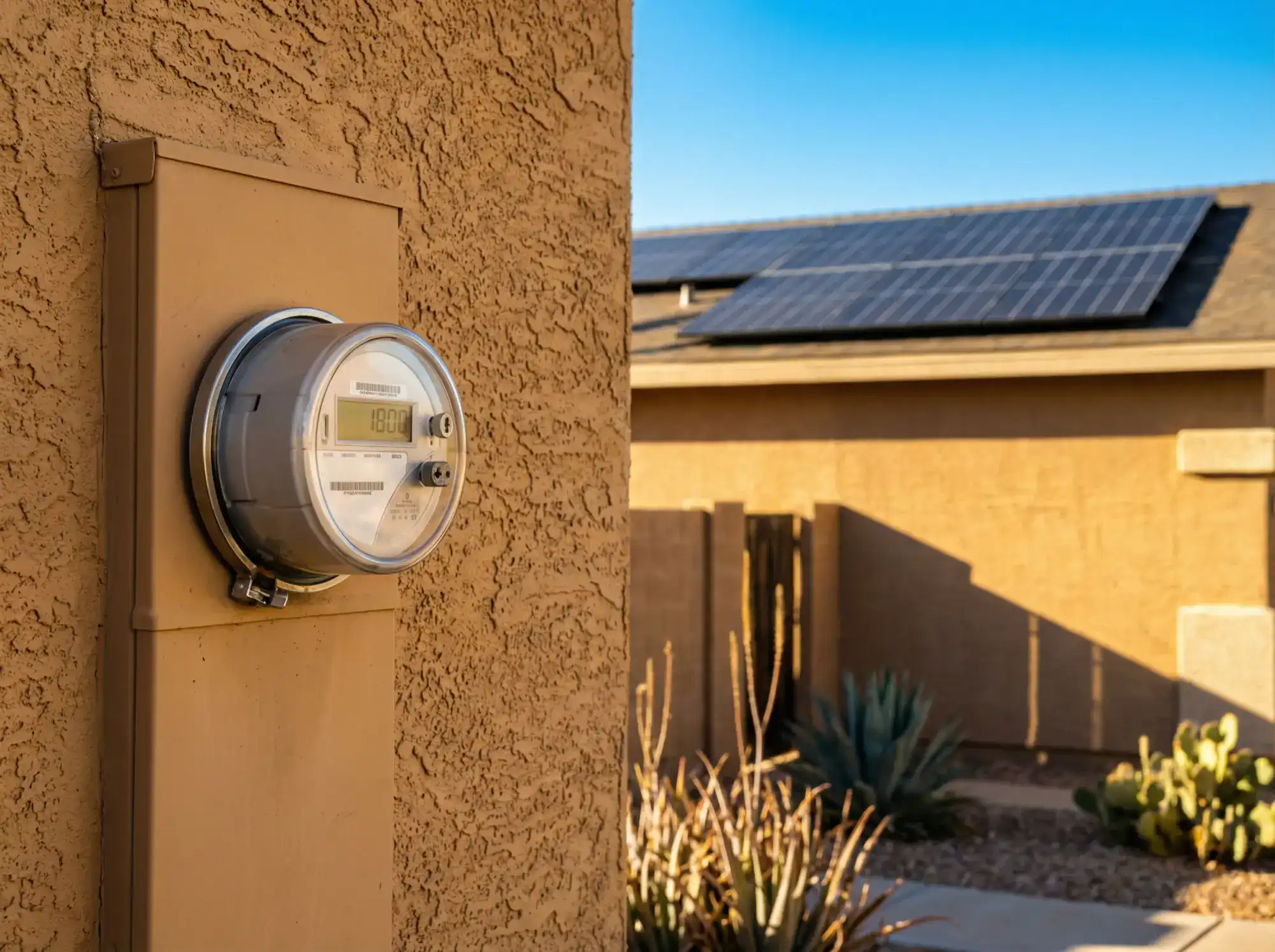
If you are researching solar for your Southern California home in 2026, you have likely heard about NEM 3.0. You may have even heard that it "killed" solar in California.
The truth is more nuanced. NEM 3.0—officially known as the Solar Billing Plan or Net Billing Tariff (NBT)—did not kill solar. It changed the math. Under the old rules, the utility grid acted as a free battery. Under the new rules, you need your own battery to make the math work.
In this complete 2026 guide, we will break down exactly what NEM 3.0 is, how it impacts your solar savings, the recent legal battles surrounding it, and why the right system design is now the difference between eliminating your electric bill and being stuck with one.
What is NEM 3.0 (The Solar Billing Plan)?
Net Energy Metering (NEM) is the policy that dictates how utility companies compensate solar owners for the excess electricity their panels send back to the grid.
Under NEM 1.0 and NEM 2.0, California homeowners enjoyed a near 1-to-1 retail credit rate. If you bought electricity from the utility for 30 cents per kilowatt-hour (kWh), they credited you roughly 30 cents for every kWh of solar power you exported.
NEM 3.0, which took effect for new solar customers after April 14, 2023, fundamentally changed this structure.
Under the Solar Billing Plan, the compensation rate for exported solar energy was slashed by roughly 75%. Instead of receiving retail rates, new solar owners are compensated based on an "Avoided Cost Calculator." This means you might buy power from the utility at 40 cents per kWh, but they only pay you 5 to 8 cents per kWh for the excess power you send them during the day.
Why Did the CPUC Change the Rules?
The California Public Utilities Commission (CPUC) argued that the old NEM structure forced non-solar customers to subsidize the grid maintenance costs of solar owners. By slashing export rates, the CPUC aimed to incentivize homeowners to install battery storage systems rather than relying on the grid to store their excess power.
The 2025 Supreme Court Ruling and AB 942
The rollout of NEM 3.0 has not been without controversy. In August 2025, the California Supreme Court ordered a lower appellate court to revisit and reassess the CPUC's decision to implement NEM 3.0, following lawsuits from environmental and solar industry groups. However, in March 2026, the California Court of Appeals upheld the NEM 3.0 framework, meaning the current rules remain firmly in place.
There was also a significant legislative victory for California homeowners in 2025 regarding Assembly Bill 942 (AB 942). Originally, this bill contained language that would have voided existing NEM 1.0 and NEM 2.0 contracts when a solar-equipped home was sold. This would have forced the new buyers onto the less favorable NEM 3.0 rates, potentially harming property values.
Fortunately, after intense pushback from solar advocates, the California Senate Energy Committee amended AB 942. The amendment preserves existing net metering contracts when homes are sold, protecting over a million solar customers and ensuring their 20-year grandfathered agreements remain intact.
How to Succeed Under NEM 3.0: Battery Storage is Mandatory
Under NEM 3.0, the old strategy of installing a massive solar array and exporting all your power to the grid is a losing financial proposition. You will export cheap power during the day and buy expensive power at night.
The new strategy is self-consumption.
To maximize your savings under the Solar Billing Plan, you must store your excess daytime solar energy in a home battery backup system and use it to power your home during the evening and peak Time-of-Use (TOU) hours.
This is why 95% of the systems Option One Solar installs today include battery storage.
With a properly sized solar and battery system, you stop relying on the utility grid. You generate your own power, store it, and consume it. This protects you from the utility's ever-increasing rates and allows you to effectively eliminate your electric bill.
The 10X Cost Gap: Why Solar Still Makes Financial Sense
Despite the changes brought by NEM 3.0, the financial argument for going solar in Southern California remains incredibly strong.
Utility rates in California continue to increase each year. Over a typical 25-year system lifespan, most homeowners pay ten times more for electricity from the utility than it would cost to generate that same power with solar.
You are massively overpaying the utility. This is a choice, not a given. While a solar and battery system requires an upfront investment, it locks in your energy costs for decades, protecting you from the relentless rate hikes of SCE, SDG&E, and PG&E.
The Option One Solar Difference: Discovery Drives Performance
Because export rates are so low under NEM 3.0, system design is more critical than ever. You cannot simply guess how many panels or batteries you need.
At Option One Solar, our discovery process drives performance. Before we design any system, we analyze your past, present, and future energy use. We evaluate your specific TOU rate schedule, your essential loads, and your future plans (like buying an EV).
Most companies skip this deep discovery. They sell generic, off-the-shelf systems that underperform under the new Solar Billing Plan rules. Done wrong, you still have an electric bill. Done right, you eliminate it.
Stop Overpaying the Utility
NEM 3.0 changed the rules, but it didn't change the reality: renting your power from the utility is the most expensive option available.
Take control of your energy costs today. Use our Solar Savings Calculator to estimate your home energy savings or call Option One Solar at (855) 502-6363 for a free, no-obligation discovery consultation. OWN YOUR POWER.
See what your own bill would do.
Sixty seconds with your electric bill gets you a real system design, real pricing, and what it saves you over twenty-five years.
See my savingsRather just talk to someone? (855) 502-6363